
from the power of horses to the horsepower of the internet
The magnificent 20th century… OK, so there were a couple of world wars, we built an atomic bomb, communism in practice was a lot less successful then communism in theory, terrorism went global – but I am a glass half full kind of girl and the 20th century also improved the lives of a lot of people.
I guess it started with the millennium. It’s not too often in your lifetime you can celebrate an event like that. But the first 900 years compared to the last 100. Now that’s a hockey stick in biz speak. Human development in the 20th century looked like the sales charts for iphones at apple 🙂
I am fascinated by the twentieth century. Part of it stems from the fact that both of my grandmothers were born within the first decade of it and lived just shy of their 100th birthdays so their lives spanned the entire 20th century.
Of course, those were the people who grew up in the era where personal information was horded like a stack of dollar bills in an airtight safe. And both my parents were the youngest in their families so there were several generation gaps between us and I didn’t have the vision as a teenager to ask them, “what was it like?”
Because it must have been a wild ride! To be born into a world where electric power was new and the automobile a fairy story, the airplane an impossibility. And then to die in a world connected by bytes of magic that meant you no longer needed to get on a plane to have a face-to-face conversation with someone on the other side of the globe. Oh, electricity, thou art a goddess at whose feet we should all worship 😉
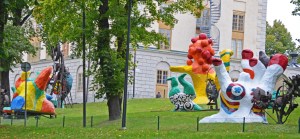 As I’ve already mentioned, I was really impressed by the intellectual content of Swedish museums. So, intrigued by an exhibit entitled, “Picasso vs. Duchamp” at the Moderna Museet. Apparently the Moderna Museet has a very large Duchamp collection. And Picasso painted enough stuff every major museum in the world has some Picasso.
Apparently they were great rivals. And very important figures in the history in modern art. This may well be blasphemy but neither has ever done much for me. So I had underestimated their importance. But the museum’s exhibition was clever enough to get its point across… really modern painting or more or less the creation of the idea of conceptual art. Paint all the time and promote yourself as some kind of art whore who might be better at being famous… or produce so little art infrequently that you might come across as a bit above the whole idea of art as a business…
Personally I was far more intrigued with the WHEEL! Picasso and Duchamp met for the first time in 1912. They are definitely two of the most influential forces in modern art in the 20th century. The museum suggests that the 20th century saw more major changes in both historical events and art history quiz items than any century before. To help support the point, a giant wheel was created with each year of the last 100 labeled and one art event and one historical event for that year cited. Visitors are encouraged to carefully turn the wheel to follow the history of art and of mankind in action… For history geeks like me, wow! Better than either of the artists’ stuff 😉
http://www.modernamuseet.se/sv/Stockholm/
Apparently when the Moderna Museet opened in 1958 it was one of the world’s most groundbreaking contemporary art venues. It introduced 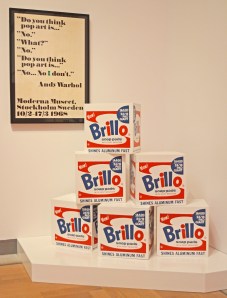 Swedes to all kinds of crazy art that at the time was being questioned as to whether it was really art or not? Now it’s modern art collection seems a bit more like a museum piece but the building is great and the collection is well organized and worth checking out. Probably better though not to go to the Tate Modern first 🙂
And, even if the permanent collection seems a bit tiny compared to the Tate or MOMA, the special exhibition was definitely worth seeing… if only for the wheel of history. So much more interesting than the Wheel of Fortune. Spin this one and you might just learn something… 😉




 life on planetm
apparently misery DOES love company
This all started when I was browsing in the shops seeing if Swedish fashion would entice me to part with some more kroner. But the palette made me feel kind of depressed. It seemed to resemble the weather outside. I wondered what came first… and if, between the challenging weather patterns and all this black and grey clothing, the Swedes were depressed.
But I just thought it was more of my silly black humour. I didn’t buy anything though. It was all too shapeless and dark. I guess Swedish women are so gorgeous they can wear a potato sack and look good. Most of the clothing seemed to be working on that model. Along with an awful lot of parkas! If you need a black parka, this is your paradise 😉
I tried to like Acne – but it just looked mostly weird and I didn’t think it would look terribly flattering on me. I am more a Dolce and Gabbana kind of girl. I like it when French guys young enough to be my son come up to me and shyly tell me in broken English that they like my dress. I didn’t think Acne was gonna get me that kind of attention… I realize I don’t look very hip. But it seems that looking sexy means I meet a lot more strangers – and my travel stories are better 😉
After my Swedish shopping experience I was reading a novel on the plane home called Delicacy by David Foenkinos. It’s definitely worth reading. But he’s French and I thought he was really picking on the Swedes with the Markus character. And there was this big emphasis on the Swedes being suicidal.
I am a woman who enjoy facts more than chocolate so I had to get some info before I wrote about the depressing clothing in my blog. Apparently, the Swedes ARE famous for being suicidal. But the average Swede… pretty happy. It would appear that really cool happy places make the unhappy people more unhappy. Not enough other people around to commiserate with apparently.
So it would appear Sweden is a kind of Disneyland. So, if you are more a Sartre Nothingness kind of person, you should likely hole up somewhere like the Democratic Republic of Congo. Lots of miserable people there to make you feel better about your lot.
Or you might just try not caring so much what other people think…
Personally I would be really happy in Sweden 🙂 But then I am pretty happy everywhere. You make your own happiness – and a lot of your luck.
I was definitely happy when I was observing – or learning about – Swedish design. They may dress like shapeless goths – but they like their interiors full of colour, shape and function.
Another highlight for me was tacking on the Architecture Museum to my Moderna Museet tour. Not only an entire history of Swedish architecture but some of the key architectural wonders happening all over the world at the same time.
One of the most interesting things I learned about was the One Million Dwellings Programme, an ambitious housing project implemented in Sweden between 1965 and 1974 by the governing Swedish Social Democratic Party to make sure everyone could have a home at a reasonable price. The aim was to build a million new dwellings in a 10-year period. At the same time, a large proportion of the older housing stock was demolished.
The other interesting fact that I learned – both in Stockholm and in London – was the impact of the first World’s Fair at the Crystal Palace (London) in 1851. I’ve been to the Crystal Palace – and to the shells of a few other World’s Fairs over my travels. There were some interesting aspects to most visits but the importance of the concept was lost in the abandoned look of the sites.
But this is why it’s good to keep travelling… and learning stuff. In Sweden, design is life it seems and the very first World’s Fair had a huge impact on Swedish society. And the world in general. Back in those days when google wasn’t a verb and the internet had not yet been invented – by either Al Gore or Tim Berners-Lee – information didn’t travel very far so the World’s Fair was a revelation… and all those interior designers selling themselves on reality TV should be eternally grateful to the Brits for kick-starting their careers generations before they were even born 🙂
In 1930, Sweden hosted the Stockholm Exhibition and introduced the world to Swedish functionalism. Ingvar Kamprad was only 4 so I doubt he attended but the rest of the world who didn’t attend would learn about Swedish functionalism via the little company he started in 1943. He called it IKEA…
So… it would appear the Swedes are mostly really happy, they like to dress in dark colours and they have a sense of style that is world-famous. All the Swedes I met seemed pretty sunny… and the sun does pop out from time to time and – thanks to that Nordic light – when it does, it’s spectacular.
Category:
artsy stuff, life philosophy, social commentary, travel stories
Tagged with: